
Artificial Intelligence (AI) is rapidly transforming the way we live and work, permeating various aspects of our daily lives. It encompasses a wide range of applications, from recommendation systems and voice assistants to image recognition and chatbots. At its core, AI is a sub-field of Computer Science focused on creating intelligent systems that can perform tasks similar to human intelligence, including problem-solving, image recognition, and language understanding.
The foundational concepts of AI are crucial for anyone entering the field. Here are some key terms and principles that are essential to understand:
AI Fundamentals for beginners
There are some core terms in AI that are used directly or indirectly in systems, If you are new in AI field then these are terms you should know before exploring or learning advance AI topics. You can learn more about topics on our blog that are linked here, and remaining topics will cover further.
Machine Learning
This is the sub-field of AI that involves training systems to learn from data and make decisions without explicit programming. ML algorithms are used to identify patterns and improve performance through experience. Examples include recommendation systems that suggest products based on user behavior.
Machine Learning (ML) is a sub-field of AI that focuses on enabling systems to learn from data and make decisions based on patterns. This approach involves training algorithms using machine learning techniques such as supervised, unsupervised, and reinforcement learning. Supervised learning involves training algorithms on labeled data, where the correct output is provided, allowing the model to learn from the examples. Unsupervised learning, on the other hand, involves discovering patterns in unlabeled data, which can be useful for clustering or anomaly detection. Reinforcement learning, where algorithms learn by interacting with environments and receiving rewards or penalties, is particularly effective in complex decision-making scenarios.
Deep Learning
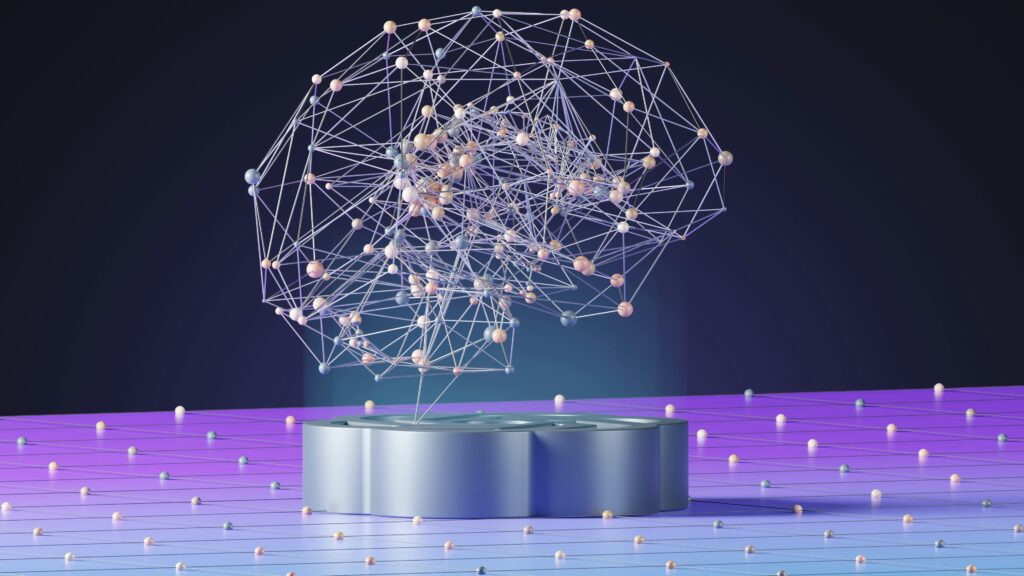
This is a subset of ML that mimics the human brain’s learning process. DL algorithms are designed to learn from large datasets to generate new content or perform complex tasks. Applications include image and speech recognition, where the system learns to recognize patterns and generate new images or speech.
Deep Learning (DL) is a subset of machine learning that mimics the human brain’s structure and function. It uses neural networks, which are composed of interconnected nodes or neurons, to process information. Deep learning algorithms can learn from large amounts of data, enabling them to recognize complex patterns and make accurate predictions. This approach is particularly effective in tasks such as image and speech recognition, where the system can learn to identify objects or recognize spoken words based on patterns in the data.
Generative AI

Generative AI is used to create new content, such as text, images, or videos. It leverages large datasets to generate original content that closely resembles the patterns found in the training data.
Generative AI refers to the ability of AI systems to generate new content, such as text, images, audio, and videos. This technology leverages the patterns learned from large datasets to create original content that closely resembles the style and quality of existing content. Generative AI systems can be used in various applications, including content creation, marketing, and even in the field of medicine, where they can generate personalized medical reports or simulate patient scenarios.
Natural Language Processing

Natural Language processing (NLP) allows computers to interact, interpret, and understand human language. NLP is essential for voice assistants and chatbots, enabling them to converse with users naturally.
Natural Language Processing (NLP) is a sub-field of AI that focuses on enabling systems to interact, interpret, and understand human language. This includes tasks such as speech recognition, text generation, and sentiment analysis. NLP systems can be used in a wide range of applications, including voice assistants, chatbots, and sentiment analysis in social media monitoring. NLP algorithms can be trained on large datasets of text to improve their ability to understand and generate human language.
Neural Network

These are systems that simulate the structure and function of the human brain. They are used for tasks like image and audio recognition, where the system learns to recognize patterns and apply them to new data.
Neural Networks are the systems that mimic the structure and function of the human brain. They consist of interconnected nodes or neurons that process information and can be used for a variety of tasks, including image and speech recognition, natural language processing.
Types of AI
AI is categorized into different types based on their capabilities and functionalities. Narrow AI is specialized for specific tasks, while General AI can perform a wide range of tasks and understand knowledge across various domains. Super AI surpasses human intelligence in problem-solving and creativity, capable of emotions and decision-making.
Understanding these foundational concepts is crucial for anyone looking to delve deeper into AI. By mastering these basics, you can begin to explore more advanced topics and applications in AI, from developing recommendation systems to creating generative AI for creative content.
Artificial Intelligence (AI) is a multifaceted field that encompasses various sub-disciplines, each contributing to the development of intelligent systems capable of performing tasks akin to human intelligence. The two primary approaches to AI learning are rule-based methods and machine learning algorithms. Rule-based methods rely on predefined rules and conditions to guide the system, whereas machine learning algorithms learn from data to improve performance without explicit programming.
Narrow AI
Narrow AI is a type of AI that is trained based on specific task or narrow range task. The narrow AI is well perform for designated task, but this type of AI will not able to perform general task. The examples are voice assistants or image recognition and others.
General AI
General AI is a type of AI that will perform like human intelligence. The general AI is like human who can perform various tasks, and they were able to understand, learn and apply the knowledge on wide range of tasks. This concept is now in theoretical concept, researcher’s goal is to make the system that will be able to self-aware, conciseness and ability make own decisions. The examples are robots that will use learned knowledge into other tasks independently without any human intervention.
Super AI
Super AI is a type of AI that surpass the human intelligence based on problem-solving and creativity. They develop emotions, desires, believes. It is also able to solve problems and make their own decisions. It could revolutionize the industries or scientific research and problem-solving. How it raises concerns regarding control and safety.
AI Types based on the Functionalities
The AI functionalities are based on four categories. These are mainly used in the practical applications in the real world scenarios.
Reactive Machines
This is the most basic form of AI where it works in the current data without taking previous experiences, or learn from past actions. These systems can perform fixed respond based on specific inputs with fixed output and without adapt it. The examples are IBM Deep Blue and Google Alpha Go. these two examples are based on playing games without learning past data.
Limiting Memory AI
This type of AI has stored some data into memory and use this for future predictions or improve the future predictions. It uses past historical data to make predictions without using long term memory. There are some machine learning models like self-driving cars, chatbots and robotics.
Theory of Mind
The Theory of Mind AI works by understanding human emotions, beliefs, intentions and desires. This type of AI is under development, and it allows the machines to perceive emotions and adjust their behaviors accordingly. The examples will be human robot interactions.
Self-Awareness AI
Thus, type of AI is advance stage where not only handles self-conciseness and awareness, but it has their own consciousnesses similar to human awareness. The example is autonomous systems.
Conclusion
In the realm of Artificial Intelligence (AI), the practical applications are vast and diverse, ranging from everyday tasks to complex systems that can mimic human intelligence. The sub-fields of AI, such as Machine Learning (ML), Deep Learning (DL), Generative AI, Natural Language Processing (NLP), and Neural Networks, each contribute to the development of intelligent systems that can perform tasks beyond the capabilities of human beings.
One practical use case of AI is in recommendation systems. These systems analyze user behavior and preferences to suggest products, services, or content that the user is likely to be interested in. For instance, Amazon’s recommendation engine uses ML algorithms to analyze a user’s purchase history and browsing behavior to recommend products that the user is likely to like.
Another example is in image recognition, where AI systems can identify objects, people, and scenes in digital images. This technology is used in applications such as facial recognition, self-driving cars, and medical imaging analysis. For example, Google’s DeepMind technology can identify and diagnose diseases in medical images with high accuracy.
In the field of natural language processing, AI systems can interact with humans using voice assistants, chatbots, and virtual assistants. These systems use NLP to understand and respond to human language, making them more conversational and user-friendly. For example, Apple’s Siri and Amazon’s Alexa use NLP to understand and respond to voice commands.
Neural networks, on the other hand, are used in applications such as image and audio recognition, where they can find patterns and recognize objects and sounds in digital images and audio data. For example, Google’s DeepMind technology can recognize and interpret images and videos with high accuracy.
Generative AI, on the other hand, is used to generate new content such as texts, images, audios, and videos. These systems use patterns based on large training datasets to generate original content that is similar to what the user might expect. For example, Adobe’s generative AI technology can create realistic images and videos that are indistinguishable from those created by humans.
In terms of architecture, AI systems are typically composed of multiple layers of algorithms and models that work together to perform specific tasks. For example, a deep learning model might consist of multiple layers of neural networks that work together to recognize patterns in images or analyze natural language.
Workflows for AI systems typically involve collecting and processing large amounts of data, training models on that data, and then using the models to perform specific tasks. For example, a voice assistant system might start by collecting data on user behavior and preferences, then training a machine learning model on that data to recognize and respond to voice commands.
4. Strategic Insights and Future Outlook
As AI continues to permeate every aspect of our daily lives, it’s clear that its influence is only expected to grow. From recommendation systems that tailor content to individual preferences to voice assistants that help us manage our schedules, AI is becoming an integral part of our digital landscape. The future of AI looks bright, with advancements in machine learning, deep learning, and generative AI poised to transform industries and open up new possibilities.
One of the key areas where AI is expected to make significant strides is in the field of natural language processing (NLP). With the rise of voice assistants like Alexa, Siri, and Google Assistant, NLP is becoming increasingly important. These systems are designed to understand and respond to human language, making them indispensable in our daily lives. As NLP continues to evolve, we can expect to see even more advanced applications that allow for more natural and intuitive interactions with technology.
Another area where AI is expected to make a significant impact is in the realm of generative AI. This type of AI is designed to generate new content based on existing patterns and data, such as images, videos, and even code. With the ability to create entirely new forms of content, generative AI has the potential to revolutionize industries ranging from art and design to marketing and advertising.
Looking ahead, it’s clear that AI will continue to play an increasingly important role in our lives. From helping us make better decisions to driving innovation in new and exciting ways, AI is poised to transform the world as we know it. As researchers and developers continue to push the boundaries of what AI can do, we can expect to see even more advanced and sophisticated applications that will continue to shape the future.
Great content! Keep up the good work!